

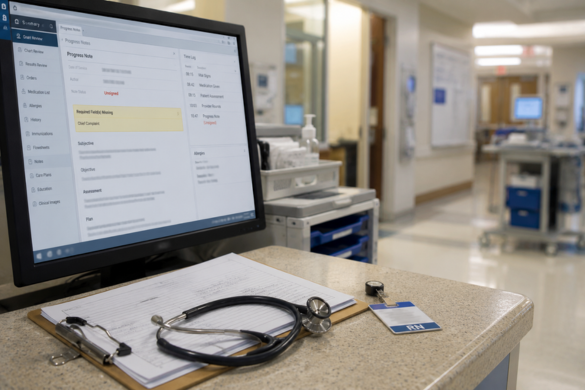
A charting error can quickly become more than a workplace issue, especially if it leads to a patient complaint, an internal investigation, or an adverse medical outcome. In many cases, nurses worry they could lose the license they worked so hard to earn over a single mistake.
The good news is that not every charting error leads to disciplinary action. Licensing boards understand that nursing is a demanding profession and that documentation issues can arise for many reasons.
What matters is how the situation is investigated, whether patient safety was affected, and how you respond once concerns are raised. If your nursing license is being questioned because of an alleged documentation error, the team at Callahan Law can help you understand your rights and protect your professional future.
If you are worried about your nursing license, call us today!
Can a Charting Error Lead to a Nursing Board Investigation?
Yes. An employer, patient, coworker, or another healthcare professional can report concerns about a nurse's documentation. Even if the mistake was unintentional, the allegation may prompt an investigation by your state's nursing board or licensing agency.
Investigators often look beyond the chart itself. They may review patient records, interview witnesses, examine workplace policies, and determine whether the documentation reflects the care that was actually provided.
A missing note, an incorrect medication entry, or an incomplete assessment does not automatically mean discipline is warranted, though it can raise questions that require a response.
If you receive notice that your nursing license is under investigation, it is important to take the matter seriously.
Statements made early in the process and documents submitted to investigators may influence how the case moves forward.
What Types of Charting Errors Create Licensing Concerns?
Not every documentation mistake carries the same level of risk. Some errors are administrative, while others may raise concerns about patient safety or professional judgment.
Licensing investigations often involve allegations such as:
- Documenting information in the wrong patient's chart.
- Failing to record medications, treatments, or assessments.
- Late entries that create questions about the accuracy of the medical record.
- Copying and pasting outdated or incorrect information into an electronic health record.
- Omitting significant changes in a patient's condition.
- Recording information that conflicts with other medical records or witness statements.
Many of these situations have explanations that are far less serious than they initially appear.
Heavy patient loads, staffing shortages, communication breakdowns, and electronic health record issues can all contribute to documentation mistakes. A complete investigation should consider the full context rather than focus on a single chart entry.
Is a Charting Error the Same as Falsifying Medical Records?
No. There is an important difference between making a documentation mistake and intentionally altering or creating false medical records. An honest error may involve forgetting to document care, selecting the wrong field in an electronic chart, or making a late entry that follows proper procedures.
Falsification generally involves intentionally recording information known to be inaccurate or altering records to conceal what actually occurred.
That distinction matters because allegations of falsifying medical records are often treated much more seriously by employers and licensing boards. Even so, investigators sometimes begin with limited information, making it important to present a complete and accurate explanation before assumptions are made about your conduct.
Can One Documentation Mistake Cost You Your Nursing License?
Many nurses assume that a single charting error means their license is in immediate jeopardy.
That is rarely how these cases are handled. Licensing boards typically evaluate the entire situation before deciding whether discipline is appropriate.
They may consider the nature of the documentation error, whether a patient was harmed, your disciplinary history, your employment record, and any corrective action taken after the mistake was discovered.
Possible outcomes range from closing the investigation without discipline to additional education, probation, or, in serious cases, more significant licensing action.
What Should You Do if You're Accused of a Charting Error?
Receiving notice of an investigation can be overwhelming, especially if you believe the allegation is inaccurate or taken out of context. The decisions you make during the early stages of the process may affect both your employment and your nursing license.
If you are accused of a documentation error, consider these steps:
- Preserve any records or information related to the incident.
- Avoid altering patient documentation after concerns have been raised unless you are following established correction procedures.
- Review your employer's policies before providing written statements.
- Be cautious when discussing the investigation with coworkers.
- Speak with an attorney before responding to a licensing board if your nursing license may be affected.
Many nurses make the mistake of assuming they can explain everything later.
In reality, the initial response often becomes an important part of the investigation.
Protecting Your Nursing Career After a Documentation Error
A charting mistake should not define your entire nursing career. Many documentation investigations involve isolated incidents rather than patterns of unsafe practice, and licensing boards often consider the full circumstances before making disciplinary decisions. Callahan Law represents nurses facing licensing investigations involving charting errors, documentation concerns, patient complaints, and other allegations of professional misconduct.
Our team works with healthcare professionals throughout Illinois, Indiana, Michigan, Missouri, and Wisconsin, helping them respond to licensing boards, protect their professional reputations, and pursue the best possible outcome for their careers.
If you are facing allegations involving charting errors or inaccurate medical documentation, contact Callahan Law to discuss your situation. We understand what is at stake, and we are committed to helping nurses protect the licenses they have worked so hard to earn.